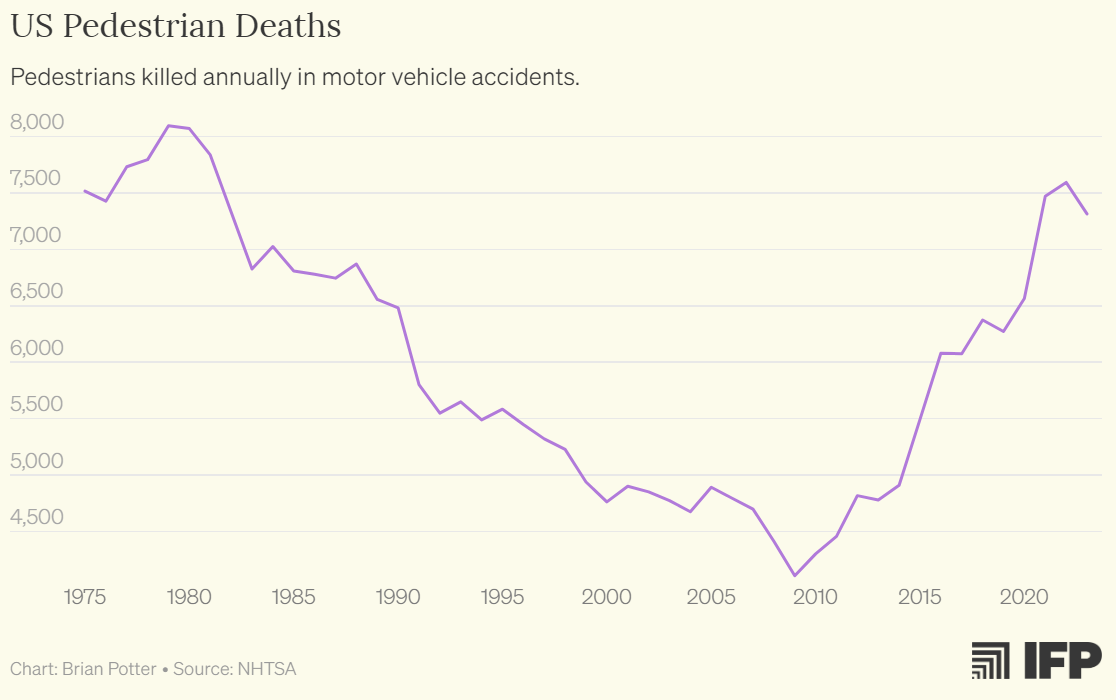
Pedestrian deaths [from motor vehicle accidents] have risen substantially in the US since 2009, by nearly 80%. This increase is seen across the US, though not in every single state. The increase is highest in states in the West and South. There has not been a similar increase in other types of motor vehicle deaths, or in pedestrian deaths in other countries.
That is from Brian Potter writing at Construction Physics. The post is a long examination of why so many pedestrians are killed by cars. He includes this chart, which I found surprising (and sad).
The likely causes of this, the continued mystery overall as to why, and the lack of support for the intuitive suspects are themselves surprising as well.
He followed with a second post where we took up some questions readers had raised. Digging deeper left him “more confused than before.” From his conclusion:
My (unsatisfying) current theory is that the increase in pedestrian deaths is due to a multitude of small factors (an uptick in homelessness, an increase in drug use, a reduction in traffic law enforcement, etc.) and/or some sort of complicated multi-factor interaction (such as reduced driver forward visibility exacerbating American’s tendency to use their phones while driving). But I’m not particularly confident of this.
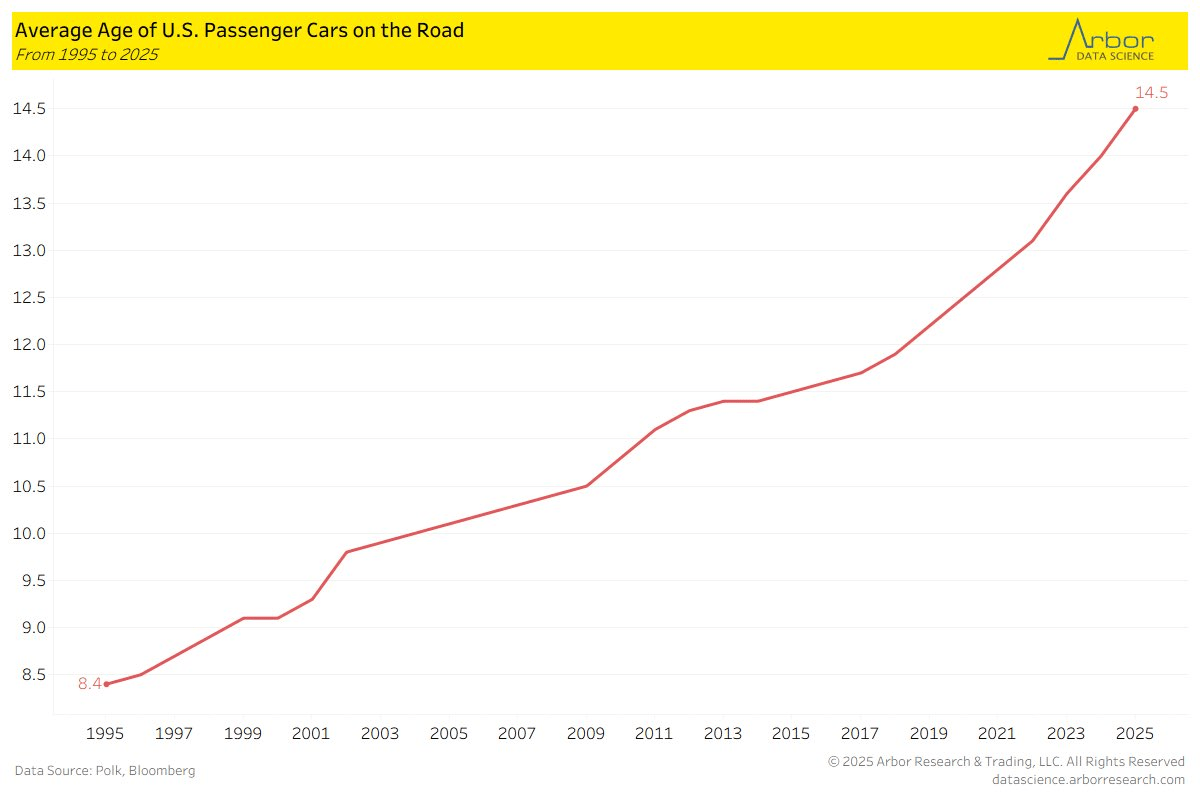
The average age of cars on the road in the US is 14.5 years. If we go back to 1995, it was almost half that, and the increase has been steady since over the past 30 years.
For those who won’t but should read the entire (short) post, the labor-hour price of a Camry has fallen over 35% over the past three decades (from around 1,600 average-wager-earner hours to about 1,000 today). So this means the average Joe can buy two Camrys today with money left over from a standard year’s labor whereas it would have taken him one and a half years to do so in the 1990s.
Magnitude Matters is a reader-supported publication. To receive new posts and support my work, consider becoming a free or paid subscriber.