

This came to me while listening to Matt Welch’s interview of Los Angeles, Mayor Karen Bass.
It was a very good interview. I shouldn’t have been but was surprised by how affable she was. All successful politicians are good at speaking and conveying likeability. On the other hand she argues by anecdote and emotion, which is again very common for a politician though much less compelling than her tone. I did find myself in agreement with her on many things related to immigration and the Trump administration’s actions in Los Angeles in particular.
But when it came to housing policy, what she had to say fell flat. Quite simply she doesn’t get it. It is hard to know if she doesn’t understand the economics or simply refuses to understand it because her constituency either doesn’t understand it or is opposed to it. Some of all probably. She is definitely the voice of those who are working against good policy.
Arguments about aesthetics are really putting the cart before the horse. The highly subjective “appropriateness” of design choices and styles is a luxury well beyond the means of us today. We can have that debate, but we cannot have it until we solve the supply issue first and foremost.
The scarcity of housing is stark effecting us in obvious ways that are important but also less obvious ways that are likely more impactful.
Let me make my point by comparing two cities that by all appearances are quite different yet share one intriguing statistic.
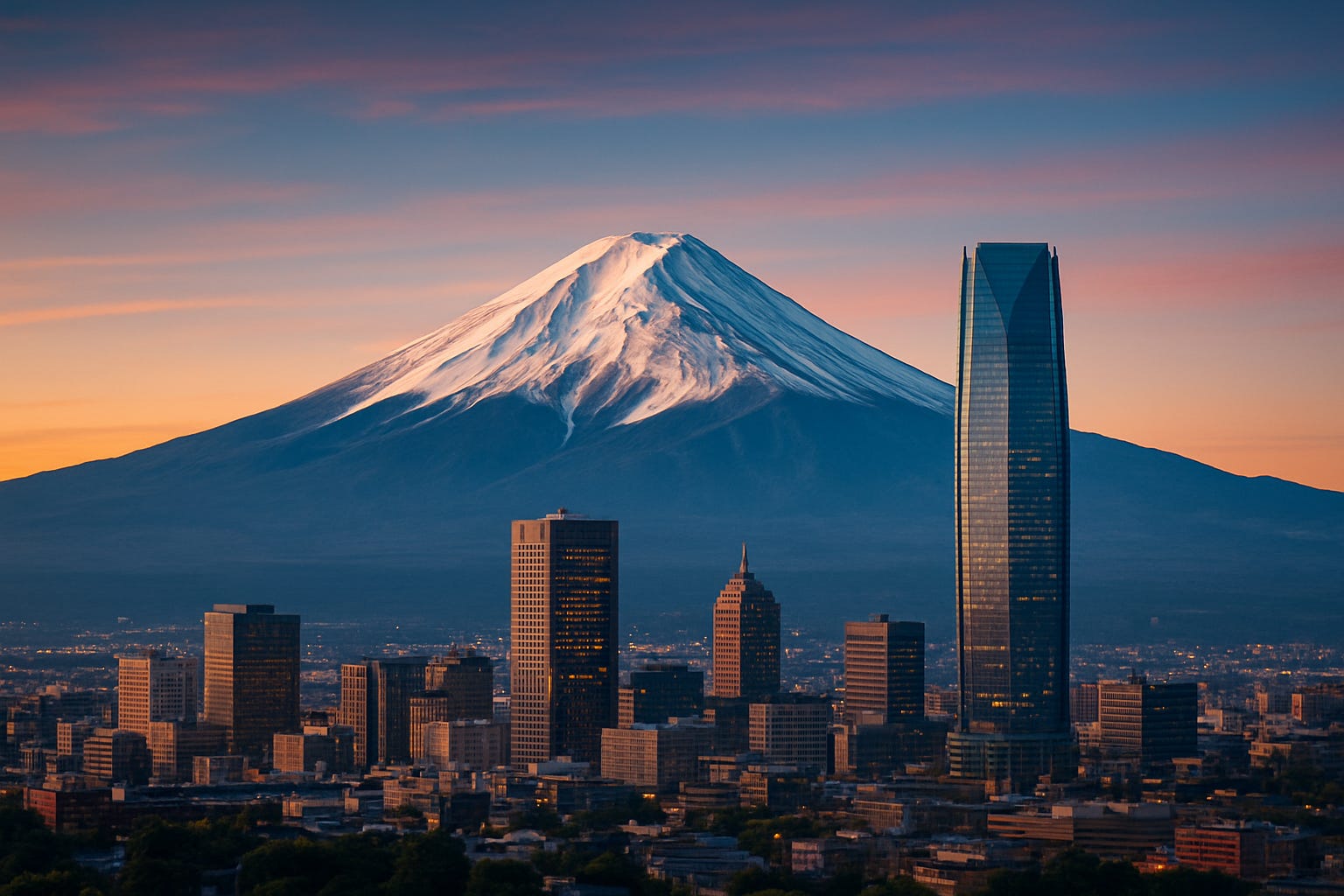
Tokyo and Oklahoma City in most people’s minds couldn’t be further apart. Yet it might surprise you to learn that the median household income for the two is roughly the same at around $75,000 once Tokyo’s is adjusted for purchasing power parity (PPP), which attempts to adjust for cost-of-living differences.1 In fact Tokyo’s might be much higher after the PPP adjustment.
Another shared characteristic is that both of them have relatively healthy housing markets. Generally speaking, both enjoy a relatively high degree of freedom to build. This accommodates and allows the cities to be as big as they “want to be.” I put that in scare quotes because cities don’t want anything. They don’t have agency. But in an economic sense, they do naturally gravitate towards a certain outcome through the market, guided as if by an invisible hand towards a sustainable level.
Oklahoma City is an MSA of roughly 1.5 million people. For Tokyo the population figure is about 25 times larger (population around 37 million).
Now imagine if we restricted the housing market of Tokyo to be equal in quantity and characteristics to that of Oklahoma City. Obviously something would have to give. Again, the population difference is about 35.5 million people. So a lot of folks in Tokyo would have to either hit the streets or hit the road for somewhere else to live.
Yes, this is an extreme example. But it’s done to illustrate the point. This is what we effectively are doing in Los Angeles and so many other American cities. We are artificially restraining the housing market forcing people to make difficult decisions. They either settle for paying a lot more for a lot less housing or they move away.
In our thought experiment, Tokyo has to shrink. This shrinking would be an extremely disruptive and economically destructive transformation. You would make almost everyone immediately much poorer. And in the long run, everyone would be much, much poorer as a result. The only beneficiaries would be the people temporarily getting a boost to their wealth by virtue of being land owners and homeowners. But this is fleeting. Even if it lasted over a few decades during the transformation, this boost would be small comfort as we’re still talking about shrinking an economy drastically.
Los Angeles “wants” to be bigger. It is an economic powerhouse with synergies and magical agglomeration benefits that imply a need for more housing, better housing, and innovative housing. When you don’t get the supply growth, you get the harsh effects of scarcity—higher prices. Make no mistake, the prices aren’t high because of the fact so many want to live there—don’t fall for the agglomeration myth. The prices are high because so many want to live there AND we aren’t letting them. It is a real-world Hunger Games.
True, in the real world we aren’t doing something as dramatic as this thought experiment. But we are doing it. It is slower and more subtle, but it is there nonetheless. Despite the loudly proclaimed pain points, many of the costs are silent—hidden from view in a great example of Bastiat’s seen and unseen. A little bit poorer than we have to be, consistently applied, and compounding into big opportunity costs.
The homelessness is less silent and basically a symptom of the self-inflicted economic wound. The affordability struggle faced by so many is slightly less obvious from the outside—very obvious to those on the ground. Even still, they don’t fully appreciate it because they don’t get to see the foregone wealth. In many cases they uproot, and because this is a great economy in a great country, they still enjoy a good life eventually putting behind them their hardship. They’ll never know how much better it could have been.
The GDP of Oklahoma City is around $105 billion while the GDP in Tokyo is around $2.6 trillion (perhaps $3.5 to $4T PPP adjusted). That 25x gap would close by necessity if the housing supply was forced to shrink as imagined here. A collapse of this gap would represent a tremendous loss of wealth for all of society—Tokyo and beyond. Again, those people have to go somewhere, and the somewhere they go even ignoring relocation costs imply less productivity. Twenty-five Oklahoma cities independent of each other do not add up to one Tokyo. The whole is much greater than the sum of the parts.
Maybe someday Oklahoma City can be as big, productive, and thriving as Tokyo is today. But that isn’t in the cards right now. By the same token, it isn’t in the cards to have Tokyo be the size of Oklahoma City in housing terms and still be either as productive (total output) or as well-off (output per capita) as it is today. Shrinking Tokyo’s housing supply implies that Tokyo eventually needs to have a smaller, less wealthy economy.
The thought experiment makes this obvious and obviously bad. If only we the same clarity when it comes to the actual housing quagmire we are drowning within.
All stats here are sourced from Gemini and should be taken to be roughly accurate since city-specific economic figures are notoriously hard to compare especially with international comparisons.