

Sometimes math is magical. Sometimes people assume math can work magic. The first case realistically describes how it can astound us. The second case describes how it can be used to deceive us. It is important to recognize the difference.
I.
Let’s start with a truly magical example that is factual and very counterintuitive.
Anscombe’s quartet is an example as shown in the picture below where four very different datasets all have the same mean, variance, correlation, and linear regression. See for yourself if you would have predicted this just looking at the graphs.
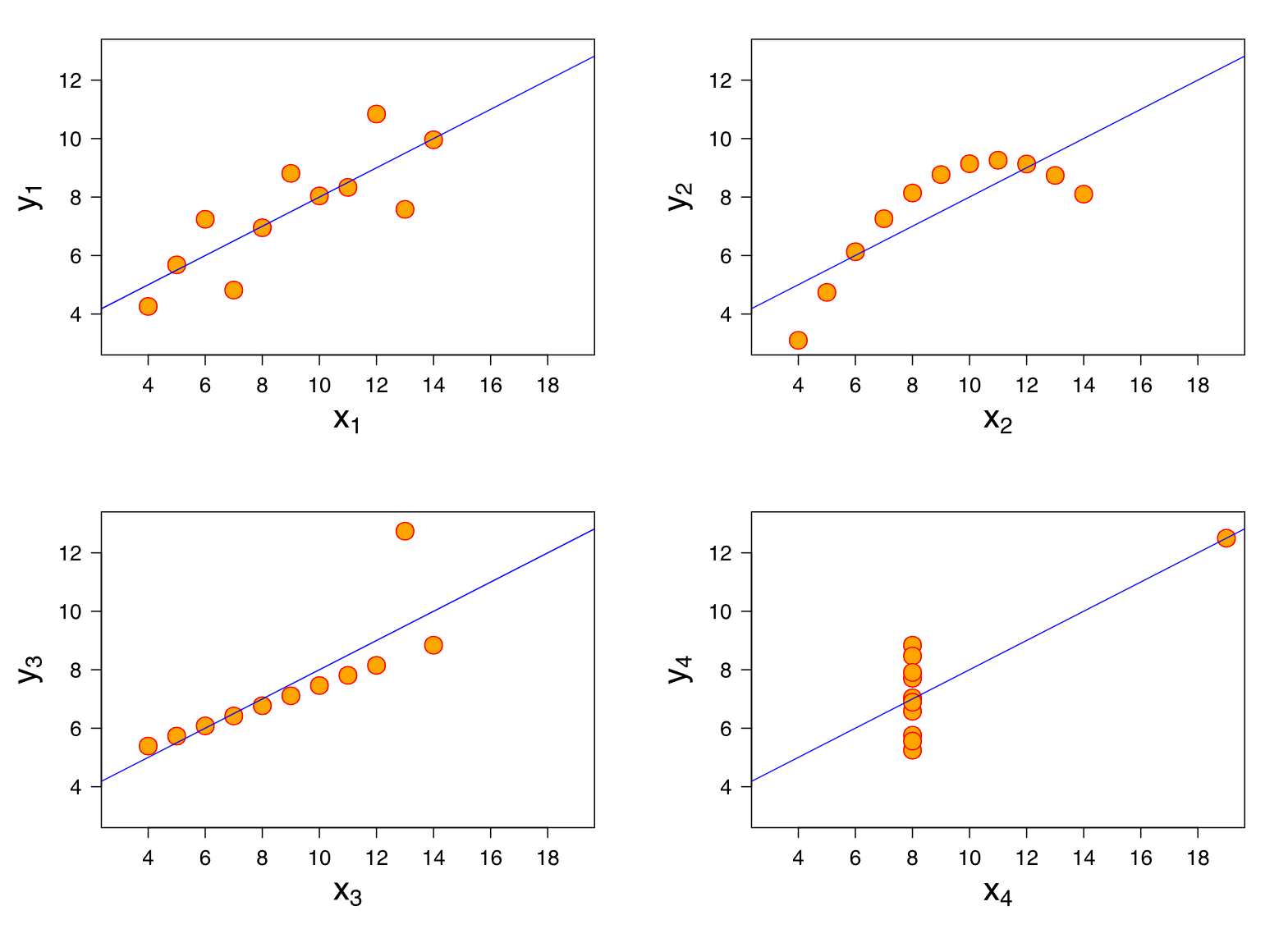
Those seemingly couldn’t be more different, and they are! Yet they share common descriptive statistical properties to a high level of exaction. The point I draw from this is that math and statistics can deceive us and explicitly be used as a tool to lie1 to us by unsuspecting and (worse) motivated actors. Now let’s examine some cases of the latter.
II.
Every time a big expense comes up, President Donald Trump assures Americans that all the money raised from tariffs will take care of it. The Cato Institute, a libertarian think tank, has been tracking Trump’s promises on how he would spend the revenue going back to the campaign. Added together, Trump has said the windfall from his tariffs will help cover nearly $6 trillion in costs. That’s over 22 times more than the administration’s own estimates for how much revenue his taxes on imports will generate this year.
That is the opening paragraph from the Washington Post editorial board where they compare Trump’s promises of what his tariffs will pay for and how much they were estimated to bring in. The graph is from the piece as well. The boxed region is the amount the Trump administration estimates that tariffs will would have brought in.
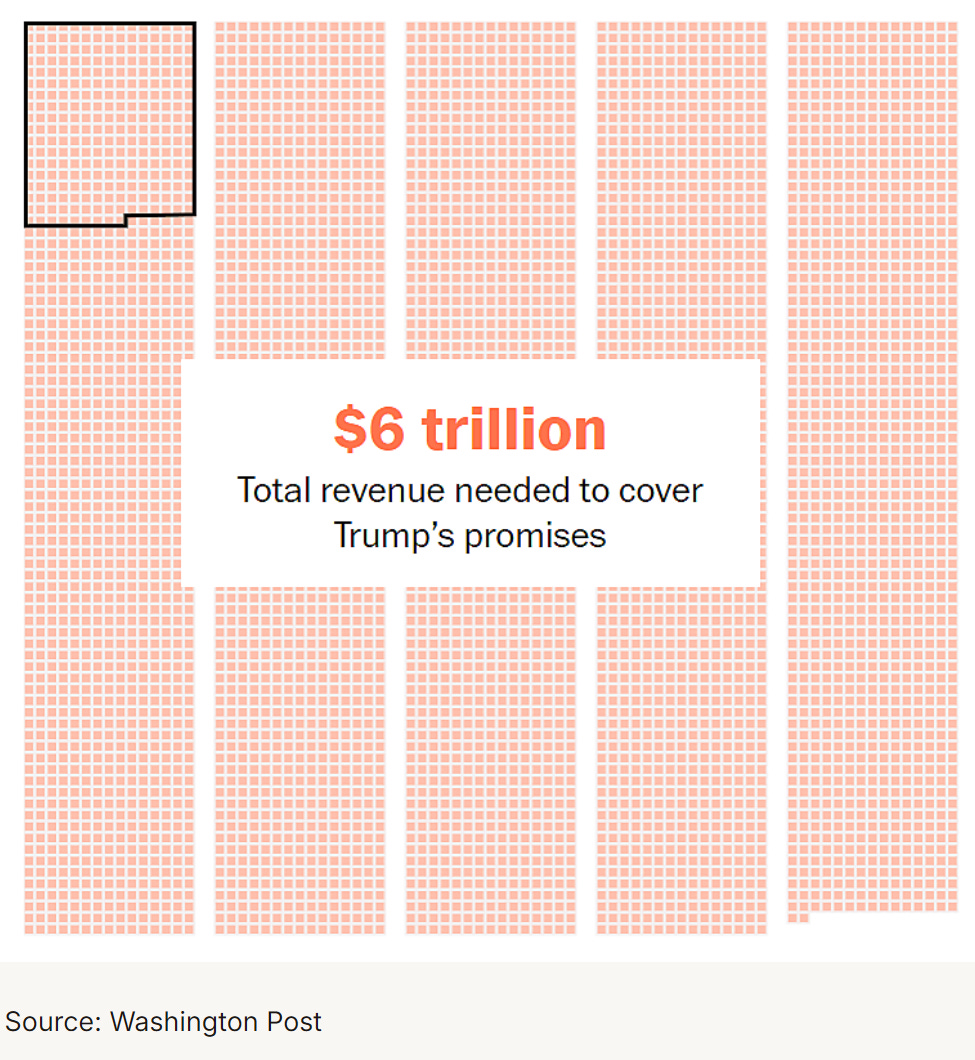
The lie is made obvious by the analysis. Without tallying up and comparing the promises to the funding source however, one could easily be duped into thinking that the tariff revenue could deliver on these various, vast promises.
Government spending is in the realm of incomprehensible numbers. We just don’t have a way to grasp them in our heads intuitively. Very big numbers have this problem. I call it a “can’t see the trees for the forest problem” in that we can see that a small forest has lots of trees, but it is nearly impossible to understand how many trees even a small forest possesses. This is all the more impossible when we try to conceptualize how many trees are in all the world’s forests.
Now that the Supreme Court has struck down the major portion of his tariff case as unconstitutional, I guess we will have to make do without the magical math the beautiful tariffs would have allowed.
III.
I have successfully wielded the tariff tool to secure colossal Investments in America, like no other country has ever seen before. By his own accounting, in four years, Joe Biden got less than $1 trillion of new Investment in the United States. In less than one year, we have secured commitments for more than $18 trillion, a number that is unfathomable to many.
That is directly from the Liar in Chief himself, Donald Trump as quoted with the emphasis by Scott Lincicome.
Not only is that figure “unfathomable”. It is also hogwash. As Lincicome points out:
To be sure, Trump’s many threats and tariff reductions will doubtless induce some amount of new investment in the United States. The real question, however, is just how much—especially on net and as compared to recent history. At this stage, the short answer to that question is “nobody knows, and we won’t know for years.” In the meantime, however, it’s already clear that we’re getting nowhere near the number Trump keeps using. Put another way, Trump’s right that $18 trillion in new investment is “unfathomable,” but that’s because it’s completely—and impossibly—untrue.
In 2024 the U.S. had a record $4 trillion of private investment as shown in this chart:
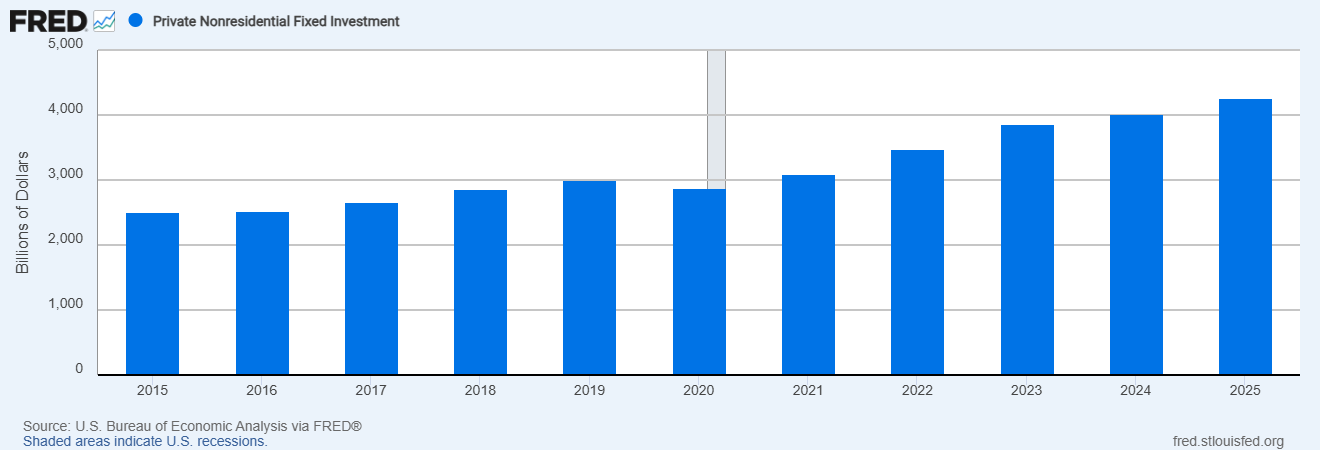
Lincicome generously tries to reconcile Trump’s claim of $1 trillion under Biden by showing that it comes close to the total foreign direct investment made under his term. He then shows that the $18 trillion claim would indeed be astounding and that is it totally fake—any way you cut it, it doesn’t add up.

The deception lies in using very big figures that are lost on most of the audience to make audacious and unreliable claims. These are not harmless lies. They are being used to gain support of the populace for an administration that is pursuing bad ends using harmful means.
Again and again Trump invokes tariffs as a magical elixir that can cure all our woes. He hides behind nonsensical big numbers using confusion as his shield and desire for magically great outcomes as his sword.
As Tim Harford likes to remind us, there is a truly ironic twist to the story of lying with statistics as the author, Darrell Huff, of the famous book followed it up with an attempt at another IN WHICH HE LIED USING STATISTICS for motivated reasoning purposes—to support the case of the tobacco industry that smoking doesn’t cause cancer. Fortunately that book wasn’t published. However, Huff did turn crank promoting this false cause including testifying before Congress.
You put this into words in a way more people should hear. Thanks for sharing.